
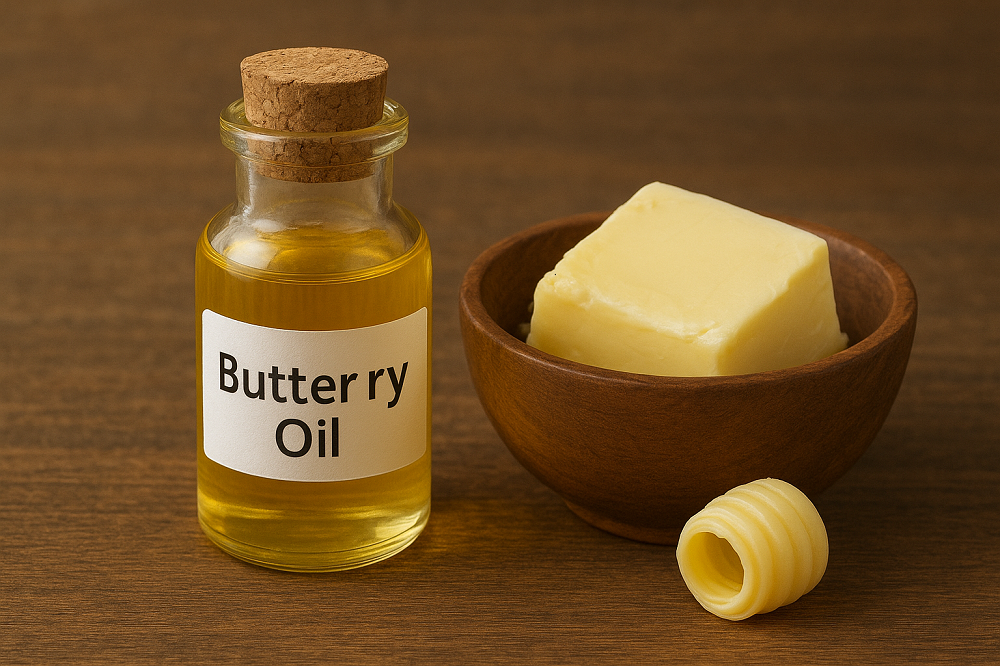
Butter oil often referred to as anhydrous milk fat AMF is a concentrated dairy product made by removing almost all the water and non-fat milk solids from traditional butter. What remains is a golden creamy oil that is rich in milk fat fat-soluble vitamins and natural flavor compounds. With its high stability long shelf life and nutritional density butter oil is widely used in both household cooking and large-scale food industries.
Unlike regular butter which contains about 80% milk fat, butter oil is around 99% pure milk fat making it an energy-dense food. Its lack of water and lactose also means it has a higher smoke point than butter making it more versatile for cooking baking and frying. Additionally butter oil retains the natural richness of butter while being easier to store transport and incorporate into recipes.
History and Origin of Butter Oil
Butter has been a dietary staple for thousands of years with origins traced back to ancient pastoral societies. As people sought to preserve dairy products without refrigeration different techniques were developed to extend butter’s shelf life. One such method was clarifying butter removing water and milk solids to leave behind pure fat.
This process eventually led to the creation of butter oil. In many cultures similar products exist
Ghee in India traditionally simmered butter with the solids removed.
Smorolie in Scandinavia clarified butter used in cooking.
Samna in the Middle East shelf-stable clarified butter.
Modern butter oil production began with advancements in dairy processing in the early 20th century. Today, it is mass-produced using industrial centrifugation and vacuum techniques ensuring consistent purity and quality for both culinary and industrial use.
How Butter Oil Is Made
The production of butter oil involves separating the pure milk fat from other butter components such as water protein and lactose. The steps typically include
Melting Butter Standard butter is gently melted at a controlled temperature.
Separation Water and non-fat milk solids casein lactose are removed through centrifugation or settling.
Purification The milk fat is further purified to remove any residual moisture or proteins.
Vacuum Drying In industrial production vacuum techniques help reduce oxidation and extend shelf life.
Packaging The final product is packaged in airtight containers to preserve freshness.
The result is a highly concentrated stable and flavorful fat with a shelf life of up to 12–18 months when stored properly.
Nutritional Composition of Butter Oil
Butter oil is one of the richest natural sources of pure milk fat. Its nutritional profile makes it calorie-dense but also a valuable source of fat-soluble vitamins and fatty acids.
Per 100g of Butter Oil Approximate
Calories 876 kcal
Total Fat 99 g
Saturated Fat 62–65 g
Monounsaturated Fat 28–30 g
Polyunsaturated Fat 3–4 g
Cholesterol 250–260 mg
Protein 0 g
Carbohydrates 0 g
Vitamins
Vitamin A: 800–900 µg
Vitamin D: 1–2 µg
Vitamin E: 2–3 mg
Vitamin K2 Present in small amounts
Other Compounds Conjugated Linoleic Acid CLA Butyrate Short-chain fatty acids
The absence of lactose and casein makes butter oil easier to digest for some individuals who are sensitive to dairy proteins though it is not suitable for strict lactose-intolerant or milk-allergic individuals.
Health Benefits of Butter Oil
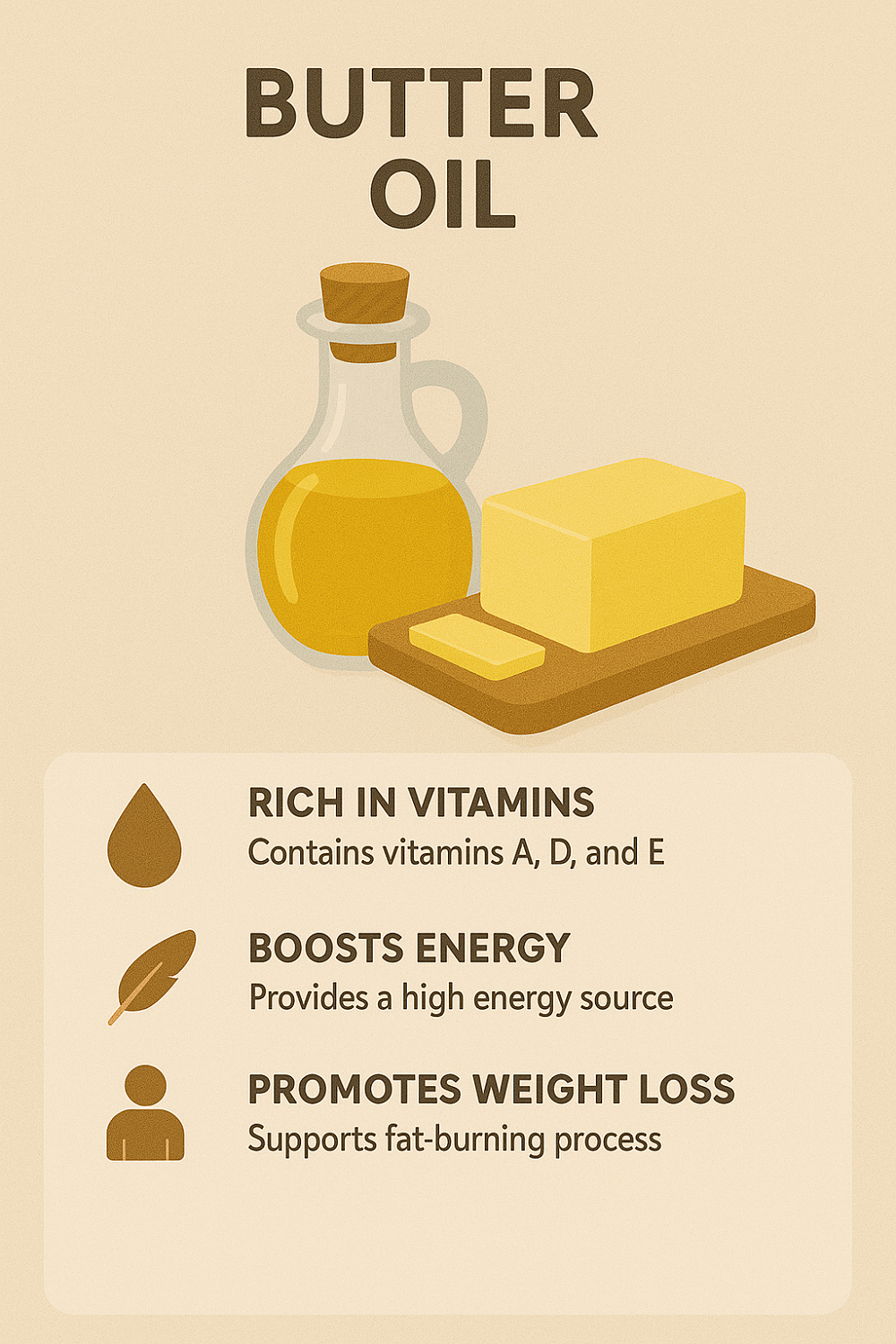
Rich Source of Energy
Butter oil is highly calorie-dense, making it an excellent source of quick energy. Athletes, manual laborers, or individuals requiring high-calorie diets can benefit from its energy-providing properties.
Provides Essential Fat-Soluble Vitamins
As one of the richest natural sources of vitamin A butter oil supports eye health immune function, and skin vitality. It also contains vitamin D for bone strength vitamin E as an antioxidant and vitamin K2 for calcium metabolism.
Supports Digestive Health
Butter oil contains butyrate, a short-chain fatty acid that nourishes the cells of the colon and supports gut health. Butyrate is linked to reduced inflammation in the digestive tract and improved intestinal function.
Promotes Heart Health in moderation
Although butter oil is high in saturated fats recent studies suggest that natural dairy fats may not be as harmful as once believed. Conjugated Linoleic Acid CLA in butter oil has been shown to have anti-inflammatory properties and may reduce body fat and improve cholesterol balance.
Boosts Immune System
The fat-soluble vitamins in butter oil particularly vitamin A and vitamin D play an essential role in maintaining immune defenses. CLA also contributes to improved immunity and reduced risk of chronic illness.
Improves Bone Health
With its natural vitamin D and K2 content butter oil helps regulate calcium absorption and deposition supporting stronger bones and teeth.
Skin and Hair Benefits
When applied topically butter oil nourishes dry skin improves elasticity and supports wound healing. It also helps condition hair leaving it soft and shiny.
Culinary Uses of Butter Oil
Butter oil is widely used in both home cooking and the food industry. Its long shelf life and higher smoke point make it more versatile than butter.
Frying and Sautéing With a smoke point of ~200–250°C butter oil is suitable for high-heat cooking.
Baking Adds richness and flavor to cakes pastries and cookies.
Dairy Industry Common in reconstituted butter cheese and milk-based sweets.
Traditional Foods: Used in Indian sweets Middle Eastern dishes, and European baked goods.
Popcorn and Snacks: Often used in commercial popcorn flavorings for its authentic buttery taste.
Its pure fat composition gives foods a distinct buttery flavor while enhancing texture and mouthfeel.
Industrial and Miscellaneous Uses
Butter oil is not only a culinary ingredient but also an important raw material in several industries
Food Manufacturing Used in chocolate ice cream and bakery industries.
Infant Nutrition Incorporated in baby formula to mimic the fat composition of breast milk.
Pharmaceuticals Used in vitamin supplements and capsules as a carrier oil for fat-soluble compounds.
Cosmetics Added to skincare products for moisturizing benefits.
Side Effects and Precautions
While butter oil offers many benefits it should be consumed responsibly
High in Calories Excessive intake can contribute to weight gain.
Cholesterol Content People with high cholesterol or heart disease should limit intake.
Not Suitable for Vegans Being an animal product it is not suitable for plant-based diets.
Allergies Though low in lactose and protein it may still trigger reactions in individuals with severe dairy allergies.
Frequently Asked Questions
Is butter oil the same as ghee?
Not exactly Both are clarified butter products but ghee is simmered longer developing a nutty flavor while butter oil is processed to be neutral and pure with minimal milk solids.
Is butter oil suitable for lactose-intolerant people?
Butter oil contains negligible lactose and casein so many lactose-intolerant individuals tolerate it well. However those with severe allergies should avoid it.
Can butter oil be stored without refrigeration?
Yes Thanks to its low moisture content butter oil is shelf-stable and can last up to 12 months if stored in a cool dark place.
Is butter oil healthy for daily use?
In moderation yes It provides essential vitamins and healthy fats but excessive intake of saturated fat should be avoided.
What is the difference between butter oil and regular butter?
Butter contains about 80% fat 16% water and 4% milk solids while butter oil is ~99% pure milk fat with minimal water and solids.