

Castor oil, a thick, pale yellow liquid extracted from the seeds of the Ricinus communis plant, has carved a niche for itself as one of the most versatile natural oils in existence. With a history that stretches back to ancient Egypt, this oil has been a part of human civilization for millennia, revered for its powerful medicinal, cosmetic, and industrial applications.
While it may not be as glamorized as some modern oils, castor oil’s quiet strength lies in its unique chemical composition rich in ricinoleic acid and its profound impact across various sectors, including skincare, haircare, digestion, pharmaceuticals, and lubricants. In a world increasingly seeking out natural alternatives, castor oil’s multifaceted profile continues to gain attention from scientists, holistic practitioners, and eco-conscious consumers alike.
The Origins and Chemical Composition of Castor Oil
Castor oil is derived from the castor bean, which, despite its name, is not a true bean but a seed from the Ricinus communis plant, native to Africa and parts of Asia. The oil has been used for over 4,000 years, with ancient Egyptians employing it for skin care, lighting lamps, and even aiding labor. Today, India is the largest producer and exporter of castor oil, accounting for over 80% of global production.
What sets castor oil apart from other vegetable oils is its high concentration of ricinoleic acid, a rare fatty acid that constitutes about 85–90% of the oil. This monounsaturated, 18-carbon fatty acid provides castor oil with its signature viscosity and powerful healing properties. Ricinoleic acid is both anti-inflammatory and antimicrobial, making the oil uniquely suitable for therapeutic applications. Additionally, the oil contains other beneficial compounds like oleic, linoleic, stearic, and palmitic acids, all contributing to its robust nutrient profile.
Health Benefits of Castor Oil
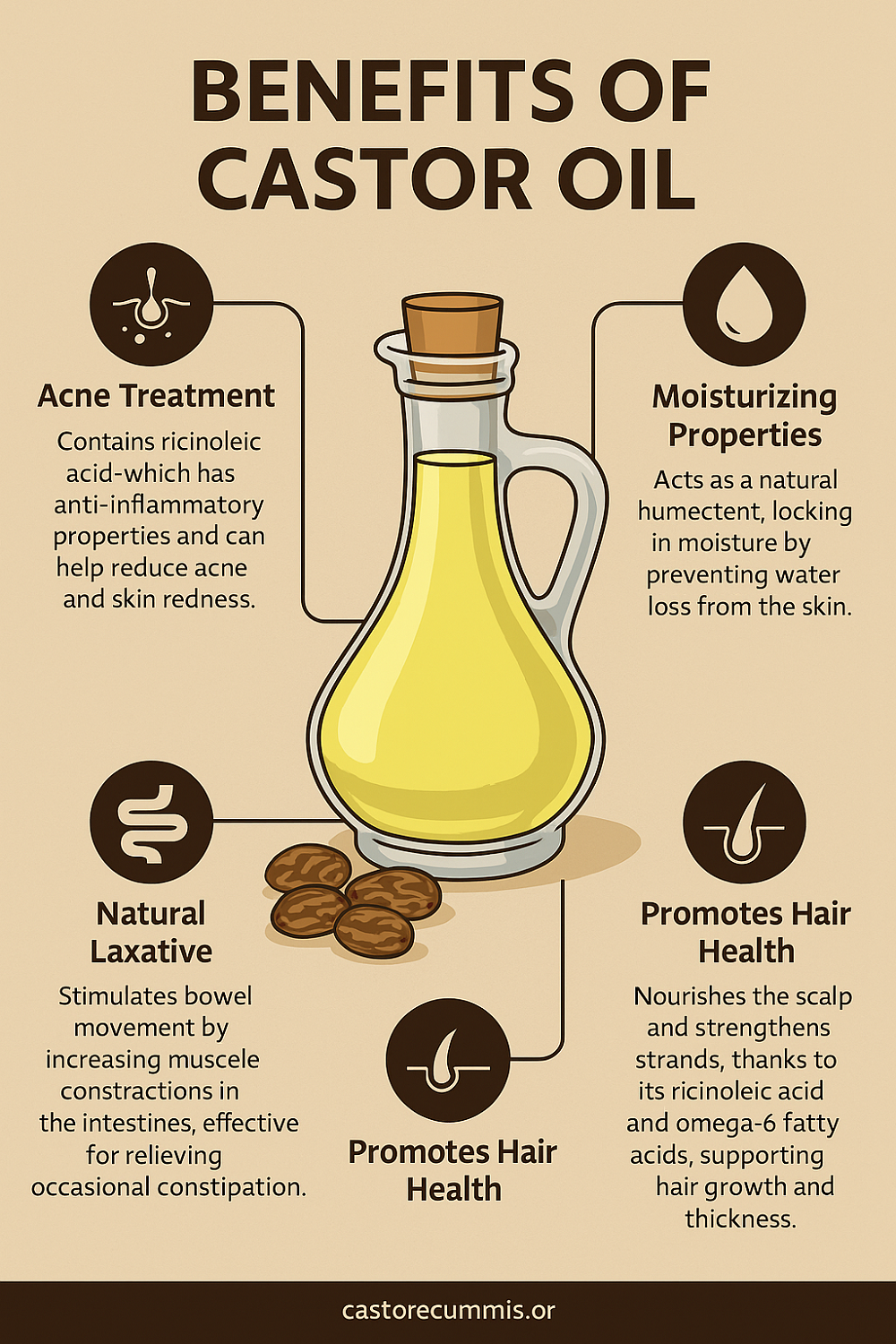
Castor oil’s health benefits are wide-ranging, encompassing both internal and external uses. One of its oldest and most well-known applications is as a natural laxative. Taken orally in small doses, castor oil stimulates the intestines by increasing the movement of smooth muscle, which can help relieve temporary constipation. However, due to its potent effect, it is typically used under guidance and not recommended for long-term treatment.
Beyond digestive health, castor oil shines as a topical agent. When applied to the skin, it can help soothe inflammation, reduce acne, and heal wounds. Its antimicrobial properties are especially valuable for treating minor cuts and scrapes, and it’s often used in natural ointments and salves. Castor oil is also beneficial in the treatment of arthritis and joint pain. When warmed and applied to aching joints, it penetrates the skin deeply and delivers anti-inflammatory relief to the muscles and tissues beneath. Some holistic practitioners recommend castor oil packs, cloth soaked in the oil and applied with heat, as a therapeutic remedy for liver detoxification and menstrual cramps.
Skincare and Cosmetic Uses
In the realm of natural skincare, castor oil is gaining renewed interest due to its moisturizing and healing capabilities. Its rich texture makes it ideal for dry or cracked skin, especially on the heels, elbows, and lips. It can be used as a standalone moisturizer or blended with lighter oils such as almond or jojoba oil to improve absorption and spreadability. For people struggling with acne, castor oil’s antibacterial and anti-inflammatory properties can be surprisingly effective. The ricinoleic acid helps combat acne-causing bacteria, while its humectant quality helps retain skin moisture, promoting a balanced complexion.
Additionally, castor oil is a common ingredient in natural makeup removers, cleansers, and serums. It is even used to enhance the texture and stability of products like lipsticks, mascaras, and foundations due to its thick, glossy consistency. For those pursuing clean beauty routines, castor oil offers a chemical-free alternative that still delivers results.
Haircare Advantages
Castor oil is nothing short of a miracle treatment for hair, and its popularity in DIY haircare routines speaks volumes. Applied to the scalp and hair, it stimulates circulation and encourages the growth of strong, thick hair. The ricinoleic acid not only nourishes hair follicles but also reduces dandruff and scalp irritation due to its anti-fungal and anti-inflammatory nature. Castor oil’s emollient properties help lock in moisture, reducing frizz, strengthening hair strands, and adding shine.
One of the most popular haircare applications is the use of Jamaican Black Castor Oil (JBCO), a variant made by roasting castor seeds before extracting the oil. This traditional method gives JBCO a dark hue and a unique nutrient profile that many believe enhances its hair-thickening qualities. Users commonly apply it to the scalp, eyebrows, and eyelashes to promote growth. However, due to its thickness, castor oil is often mixed with lighter oils like coconut or argan oil to make application easier and more effective.
Industrial and Pharmaceutical Applications
Castor oil’s industrial utility is just as impressive as its therapeutic qualities. Due to its high viscosity and lubricating properties, castor oil is a popular base for bio-based lubricants, hydraulic fluids, and brake fluids. It performs well under both high and low temperatures, making it ideal for demanding environments such as aerospace and automotive applications.
Pharmaceutical-grade castor oil is also widely used as a carrier oil for medicines and in the production of capsules. It acts as a solubilizing agent for lipophilic drugs, enhancing their absorption in the digestive system. Moreover, castor oil derivatives, such as PEG-40 hydrogenated castor oil, are frequently used in ointments, creams, and emulsions for their emulsifying properties.
In the manufacturing sector, castor oil is utilized in making paints, coatings, inks, adhesives, plasticizers, and even biodegradable plastics. Its renewable nature and high chemical reactivity make it a sustainable alternative to petroleum-derived ingredients.
Safety and Precautions
Although castor oil is generally considered safe for topical and occasional internal use, it does require caution. When taken orally, it should be used sparingly and only as directed. Overuse can lead to dehydration, abdominal cramps, and dependency. Pregnant women are often advised to avoid using castor oil internally due to its potential to induce labor.
On the skin, castor oil is usually well-tolerated, but allergic reactions can occur. A patch test is recommended before widespread use. If irritation or rash develops, discontinue use immediately. People with very oily or acne-prone skin may want to dilute it or use it in moderation, as its richness can sometimes clog pores if not removed properly.
Castor Oil in Modern Wellness Trends
As the wellness movement continues to grow, castor oil has found a firm place in natural health regimens. Influencers and health enthusiasts frequently showcase their use of castor oil for oil cleansing, oil pulling, swishing oil in the mouth for oral healt,h and detox wraps. DIY face masks, hair treatments, and belly packs have become increasingly popular, spurred by the belief that castor oil can support hormone balance and improve immune function when used externally with heat.
Ayurvedic and naturopathic medicine traditions have also upheld the use of castor oil for centuries. In Ayurveda, it is classified as a purgative and used to remove toxins from the digestive tract. It is also considered helpful for Vata imbalances—conditions related to dryness and coldness in the body—thanks to its warming, lubricating qualities.
Sustainability and Environmental Benefits
Another important aspect of castor oil is its sustainability. The Ricinus communis plant is drought-resistant and can grow in poor soil, making it a low-impact crop compared to many others. It requires minimal pesticides and fertilizers, and its oil yield per hectare is relatively high. This makes it an environmentally friendly option for both small-scale farmers and large industrial producers.
With global awareness of climate change and ecological impact on the rise, the renewable nature of castor oil presents a compelling alternative to petroleum-based products. Companies are increasingly seeking out green chemistry solutions, and castor oil’s unique molecular structure makes it suitable for use in biodegradable polymers and biofuels, supporting the transition to more sustainable industries.
Use Castor Oil
When shopping for castor oil, quality is paramount. Look for 100% pure, cold-pressed, hexane-free castor oil. Organic certifications further ensure that the product is free from harmful pesticides or GMOs. For cosmetic use, expeller-pressed and filtered varieties are ideal. For medicinal or internal use, always consult a healthcare provider and choose pharmaceutical-grade castor oil.
Incorporating castor oil into your routine doesn’t have to be complicated. For skin, apply a few drops at night as a moisturizer or combine it with shea butter for a richer cream. For hair, massage into the scalp and leave overnight as a treatment mask. For digestive support, use only small amounts (1–2 teaspoons) if approved by your physician. For castor oil packs, soak a cloth in warm castor oil, place it on the desired area (abdomen, joints, etc.), and cover with a heating pad for 30–60 minutes.