

Chamomile oil has been cherished for centuries for its soothing properties gentle fragrance and powerful healing potential. Extracted from the flowers of the chamomile plant this essential oil is more than just a pleasant scent it is a versatile natural remedy with applications ranging from
skincare and hair care to stress relief and even digestive support. We’ll explore the origins of chamomile oil its different varieties its chemical composition scientifically backed health benefits and how you can use it effectively and safely in your daily routine.
Chamomile Oil
What is Chamomile Oil?
Chamomile oil is an essential oil obtained through steam distillation of the flowers of the chamomile plant. It is a concentrated aromatic and rich in therapeutic compounds. Chamomile itself comes in several varieties but the two most prominent types used for oil production are German Chamomile Matricaria recutita and Roman Chamomile Chamaemelum nobile. Although both share many benefits their chemical composition and aroma differ slightly giving each unique properties and best use cases.
German chamomile is known for its deep blue color due to its high chamazulene content a compound celebrated for its anti inflammatory qualities. Roman chamomile on the other hand has a sweet apple like fragrance and is especially prized for calming the mind and body.
A Brief History
Chamomile has been used as a medicinal herb since ancient times. The Egyptians revered chamomile for its healing powers and dedicated it to their sun god Ra using it to treat fevers and as part of their embalming rituals. In ancient Greece and Rome, chamomile was brewed into teas and applied topically to soothe the skin and digestive system. Through the Middle Ages chamomile was a household remedy across Europe valued for everything from easing menstrual cramps to promoting restful sleep.
The Varieties of Chamomile Oil
While both German and Roman chamomile oils share some benefits understanding their unique properties can help you choose the right one for your needs.
German Chamomile Oil
Botanical Name Matricaria recutita
Color Deep blue
Main Compounds Chamazulene bisabolol flavonoids
Best For Reducing inflammation easing muscle pain calming irritated skin
Roman Chamomile Oil
Botanical Name Chamaemelum nobile
Color Pale yellow
Main Compounds Esters like isobutyl angelate bisabolol pinocarvone
Best For Relaxation reducing anxiety promoting better sleep
Chemical Composition
Chamomile oil’s effectiveness comes from its unique blend of chemical constituents:
Chamazulene is Anti-inflammatory and an antioxidant
α-Bisabolol Soothes irritation and supports skin healing
Flavonoids Protect against oxidative stress
Esters provide calming and antispasmodic effects
Terpenoids Contribute to the oil’s antimicrobial and antifungal activities
Each of these compounds works synergistically, giving chamomile oil its broad spectrum of therapeutic effects.
Health and Beauty Benefits of Chamomile Oil
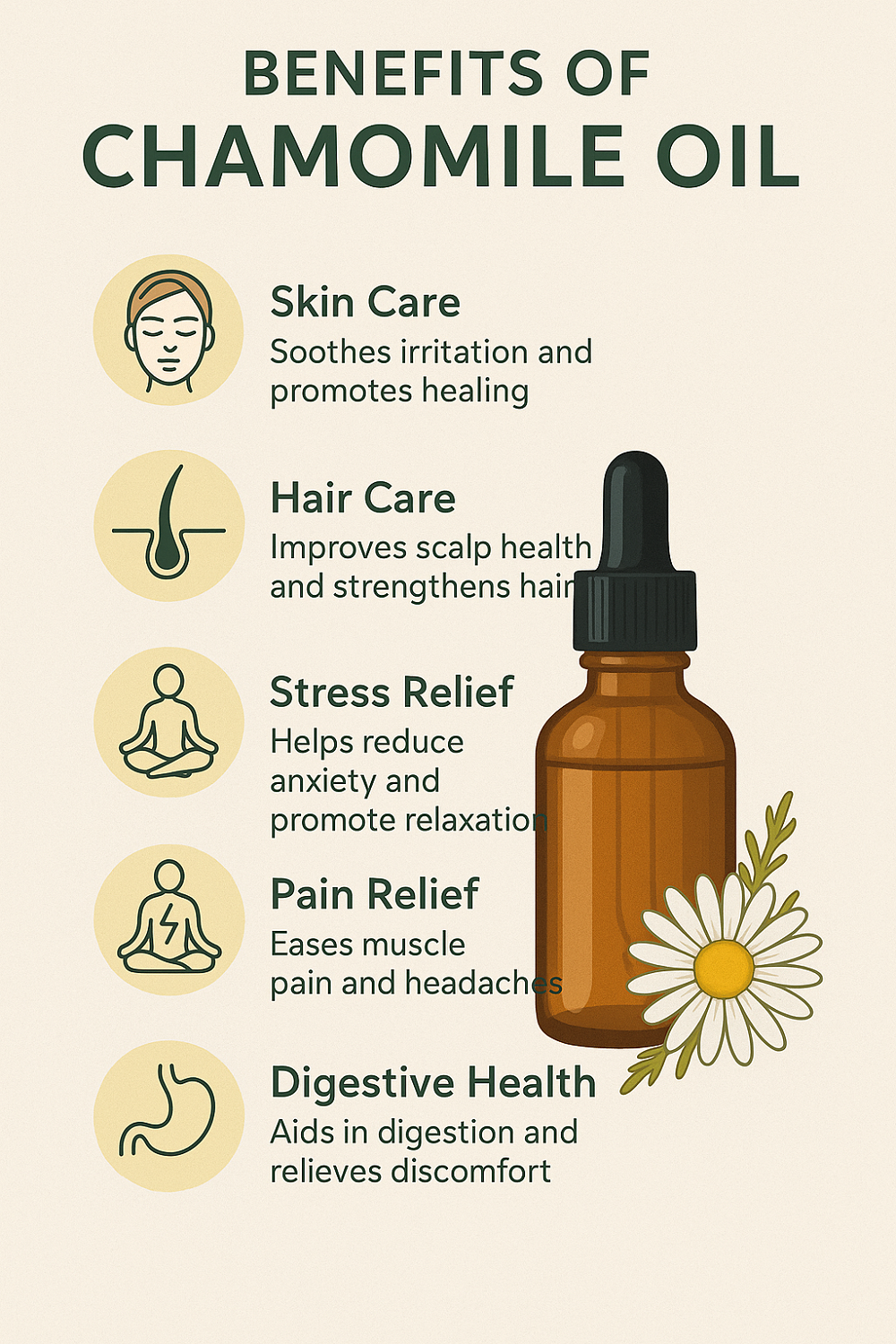
Skin Care Benefits
Soothes Irritation and Redness
Chamomile oil is a go to remedy for sensitive irritated or inflamed skin. Its anti-inflammatory compounds particularly chamazulene and bisabolol help reduce redness swelling and discomfort. It can be used to calm eczema rosacea, psoriasis and sunburn.
Supports Wound Healing
Chamomile oil promotes faster healing by stimulating skin regeneration and preventing infection due to its antimicrobial properties. Diluted chamomile oil can be applied to minor cuts scrapes or insect bites to encourage recovery.
Moisturizes and Softens Skin
The oil helps lock in moisture making it a great addition to natural skincare products for people with dry skin.
Hair Care Benefits
Improves Scalp Health
Its anti inflammatory and antimicrobial qualities make chamomile oil beneficial for soothing an itchy flaky scalp and combating dandruff.
Natural Hair Lightener
Roman chamomile in particular is used in hair rinses to enhance natural highlights in light hair giving it a sun-kissed look over time.
Strengthens Hair Follicles
The nutrients and antioxidants in chamomile oil can nourish hair roots reducing hair fall and promoting growth.
Mental and Emotional Well-being
Relieves Stress and Anxiety
Chamomile oil’s calming aroma helps reduce cortisol levels and soothe the nervous system. Diffusing it in your home or inhaling it from a tissue can have an almost immediate relaxing effect.
Promotes Better Sleep
Roman chamomile is well known as a gentle sedative. Diffusing it before bedtime or adding a few drops to your pillow can encourage deeper more restful sleep.
Eases Symptoms of Depression
Aromatherapy with chamomile oil has been shown to help uplift mood and reduce symptoms of mild depression.
Pain Relief
Chamomile oil has natural analgesic properties, making it helpful for
Muscle aches
Joint pain from arthritis
Menstrual cramps
Headaches and migraines
Massaging diluted chamomile oil onto the affected area can relieve discomfort and improve circulation.
Digestive Health
Chamomile oil can ease digestive discomfort such as
Bloating
Gas
Indigestion
Stomach cramps
While essential oils should not be ingested without expert guidance topical application over the abdomen diluted in a carrier oil can help relax the digestive tract muscles.
How to Use Chamomile Oil
Topical Application
Always dilute chamomile oil in a carrier oil like coconut jojoba, or sweet almond oil before applying to the skin. A safe dilution ratio is 2 3 drops of chamomile oil per teaspoon of carrier oil.
Examples
For Skin Irritation Blend chamomile oil with aloe vera gel and a carrier oil for a soothing balm.
For Scalp Health Add a few drops to your regular shampoo or create a scalp massage oil.
Aromatherapy
Diffusing chamomile oil in an essential oil diffuser or adding it to a bowl of steaming water for inhalation can help reduce stress anxiety and congestion.
Bath Soak
Mix chamomile oil with Epsom salts and a carrier oil then add to warm bathwater for a calming soak that relaxes both muscles and mind.
Safety Precautions
While chamomile oil is generally considered safe for most people there are a few important precautions
Dilution is essential Never apply undiluted chamomile oil directly to skin.
Allergy considerations People allergic to plants in the daisy family such as ragweed marigold or chrysanthemum. May react to chamomile.
Pregnancy and breastfeeding Consult a healthcare provider before using chamomile oil.
Medical conditions If you are on blood thinners or have hormone sensitive conditions seek medical advice before use.
Choosing Quality Chamomile Oil
To get the most benefit, select a high-quality, pure essential oil
Look for 100% pure chamomile essential oil with no additives.
Choose a reputable brand that provides GC/MS test results (Gas Chromatography/Mass Spectrometry) for purity.
Opt for oils stored in dark glass bottles to protect from light degradation.
Be aware that true chamomile oil can be expensive due to the large quantity of flowers required for extraction.
Chamomile Oil Recipes
Calming Face Serum
2 tbsp jojoba oil
4 drops Roman chamomile oil
2 drops lavender oil
Mix and store in a dark glass bottle. Apply to face before bedtime.
Anti-Dandruff Scalp Oil
2 tbsp coconut oil
5 drops German chamomile oil
Massage into scalp and leave for 30 minutes before washing.
Sleep-Enhancing Diffuser Blend
3 drops Roman chamomile oil
2 drops of lavender oil
1 drop cedarwood oil
Add to diffuser 30 minutes before bedtime.