

Corn oil also known as maize oil is one of the most widely used vegetable oils around the globe. Extracted from the germ of corn kernels this golden liquid has found its way into households restaurants and food manufacturing industries alike.
It is favored not only for its neutral taste and high smoke point but also for its economic viability and wide range of applications. In this comprehensive guide we explore everything there is to know about corn oil from its origins and production process to its health benefits nutritional profile industrial applications and much more.
The Origins and Production of Corn Oil
Corn oil is derived from the germ of the corn kernel a small portion of the seed that contains most of its nutrients and essential oils. Unlike olive oil which is extracted directly from the fruit or coconut oil which comes from dried coconut meat corn oil undergoes a more intensive refining process. First the kernels are cleaned and dried. Then the germ is separated either through mechanical or wet milling. The germ is pressed or solvent extracted to pull out the raw oil which is then refined bleached, and deodorized commonly known as the RBD process to produce the final product the clean pale yellow oil you see on grocery shelves.
The refining process is essential to make corn oil suitable for high heat cooking and long term storage. While it does remove some nutrients it also eliminates impurities and free fatty acids that could affect taste and shelf life. Thanks to technological advances modern methods can extract more oil with greater purity making corn oil an affordable choice for consumers worldwide.
Nutritional Profile of Corn Oil
Corn oil is primarily composed of polyunsaturated and monounsaturated fats with a smaller amount of saturated fats. A tablespoon 13.6 grams of corn oil typically contains
Calories 120
Total Fat 14 grams
Saturated Fat1.7 grams
Monounsaturated Fat 3.8 grams
Polyunsaturated Fat 7.4 grams
Vitamin E 13% of the Daily Value
Omega-6 Fatty Acids High content
Omega-3 Fatty Acids Minimal content
Cholesterol 0 milligrams
One of the standout features of corn oil is its high vitamin E content a powerful antioxidant that helps protect cells from oxidative stress. However its also worth noting that corn oil is rich in omega 6 fatty acids which although essential should be consumed in moderation and ideally balanced with omega 3s to maintain optimal health.
Health Benefits of Corn Oil
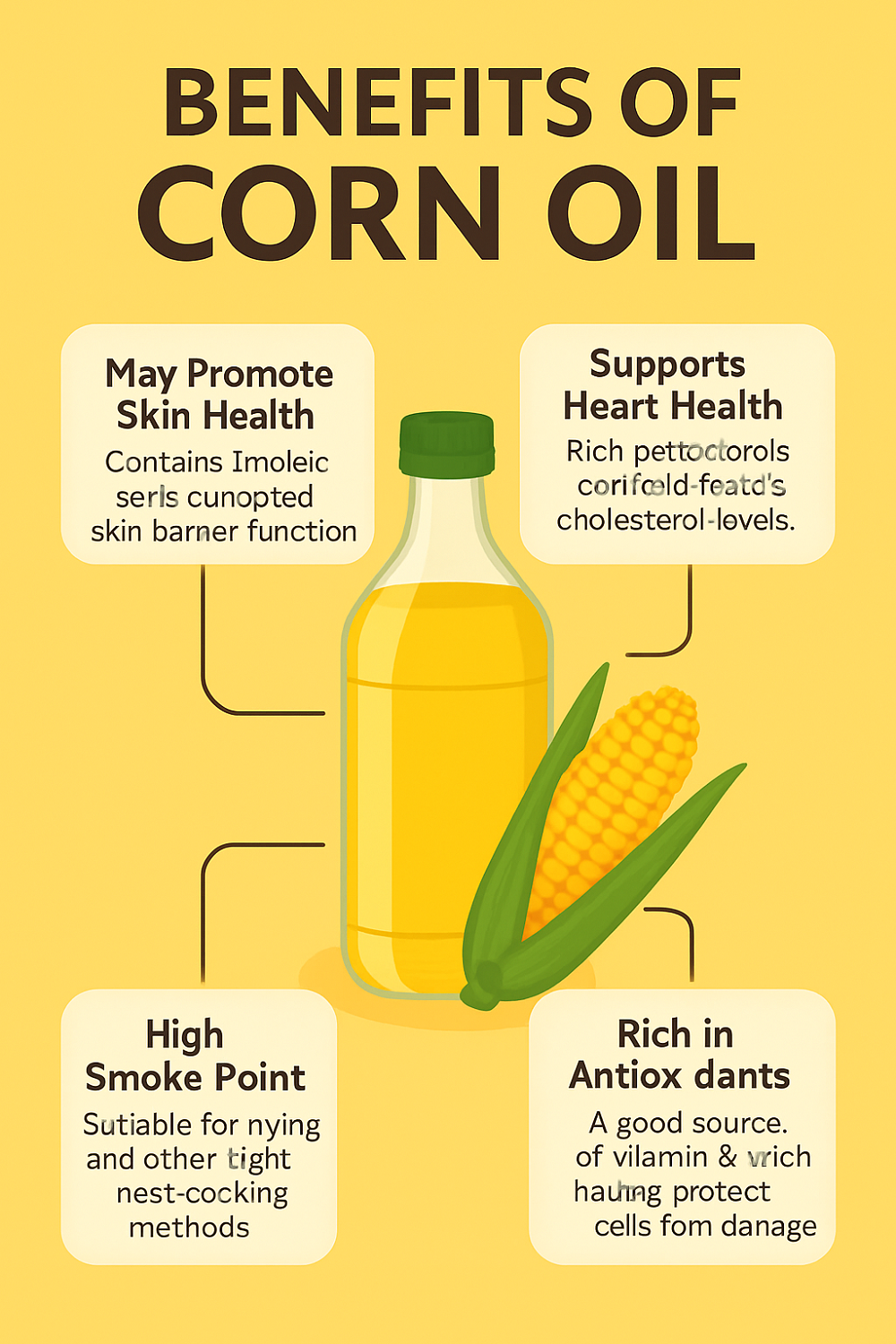
While corn oil has received mixed reviews over the years when used properly and in moderation it can offer several health benefits. Below are the most recognized advantages
Heart Health
Corn oil contains phytosterols plant compounds that resemble cholesterol and compete with it for absorption in the digestive system. This means that regular intake of phytosterol rich corn oil can help reduce LDL bad cholesterol levels. The American Heart Association has also recognized corn oil’s potential in supporting cardiovascular health when used in place of saturated fats such as butter or lard.
Rich in Antioxidants
Vitamin E one of the main antioxidants found in corn oil plays a key role in neutralizing free radicals supporting immune function, and reducing inflammation. This antioxidant protection may contribute to lower risks of chronic diseases including heart disease and certain cancers.
High Smoke Point
Corn oils high smoke point around 450°F 232°C makes it ideal for frying grilling and other high heat cooking methods. Unlike some oils that degrade and release harmful compounds when exposed to high temperatures refined corn oil remains stable and safe helping retain the integrity of the food.
Skin and Hair Benefits
Though primarily used for cooking corn oil is occasionally used in skincare and haircare formulations due to its moisturizing properties. It helps lock in moisture making it suitable for dry or flaky skin. Its vitamin E content may also contribute to anti aging and skin repair effects.
May Support Eye Health
Corn oil contains lutein and zeaxanthin carotenoids known to protect the eyes from oxidative damage and harmful blue light. Although not as potent a source as leafy greens the presence of these nutrients can still contribute to long term visual health when consumed as part of a balanced diet.
Concerns and Considerations
Despite its benefits corn oil is not without controversy. Critics often point to its high levels of omega 6 fatty acids as a potential risk factor. In the modern diet many people consume excessive omega-6s found in vegetable oils processed snacks and meats. and insufficient omega-3s found in fish flaxseeds and walnuts. This imbalance has been linked to increased inflammation which is believed to be a root cause of numerous chronic diseases.
Additionally because most corn grown in the US is genetically modified GMO corn oil often comes from GMO crops. While major health organizations have deemed GMO foods safe some consumers still prefer non GMO or organic alternatives. Fortunately several brands now offer non GMO certified corn oil to meet this demand.
Moreover the refining process can strip away beneficial plant compounds meaning unrefined or cold pressed oils though rare in corn oil may retain more nutrients. If health is your top priority, it may be worth considering oils like extra virgin olive oil avocado oil or flaxseed oil for cold applications like salad dressings.
Common Culinary Uses of Corn Oil
Corn oil’s light flavor high smoke point and affordability make it a staple in home kitchens and professional foodservice environments. Here are some of the most common culinary uses
Deep Frying Corn oil is one of the go-to oils for deep frying due to its ability to withstand high heat without breaking down or altering the food taste.
Sautéing and Stir Frying Its neutral flavor allows the ingredients to shine without overpowering the dish.
Baking It is often used in recipes for cakes muffins and breads where a neutral fat is desired.
Grilling and Roasting Brushing meats or vegetables with corn oil helps enhance browning and prevents sticking.
Margarine and Shortening Production Corn oil is used in processed foods and spreads due to its texture and stability.
Salad Dressings and Marinades Though less common in cold applications compared to olive or sesame oil corn oil still works well in vinaigrettes when paired with strong seasonings.
Non Culinary and Industrial Uses of Corn Oil
Beyond the kitchen corn oil serves several other industries thanks to its chemical composition and physical properties. Some notable applications include
Biodiesel Production Corn oil is used to make biofuels contributing to renewable energy solutions.
Soap and Cosmetic Manufacturing It acts as a moisturizing and emollient agent in many beauty products.
Textiles and Plastics Corn oil derivatives are used in producing lubricants solvents and biodegradable plastics.
Animal Feed Certain processed feed blends for livestock may include corn oil as a fat source.
Corn Oil vs Other Cooking Oils
When choosing cooking oil its essential to consider health taste cooking application and personal preferences. Heres how corn oil compares to a few other popular oils:
Corn Oil vs Canola Oil
Smoke Point Similar 400 450°F
Fat Profile Canola has more omega 3s corn oil has more omega 6s.
Flavor Both are neutral.
Health Canola oil may offer better balance of essential fatty acids.
Corn Oil vs Olive Oil
Smoke Point Corn oil has a higher smoke point.
Fat Profile Olive oil is richer in monounsaturated fats.
Flavor Olive oil has a stronger, fruitier taste.
Health Extra virgin olive oil is considered more heart healthy due to its antioxidant polyphenols.
Corn Oil vs. Vegetable Oil Blended
Price Similar often interchangeable.
Composition Vegetable oil blends often include corn oil.
Versatility Nearly identical in cooking uses.
How to Store Corn Oil
To ensure your corn oil stays fresh store it in a cool dark place tightly sealed and away from direct sunlight. While refined corn oil has a longer shelf life than unrefined oils, it can still go rancid over time. Signs of spoilage include a sharp off odor and bitter taste. For best results use the oil within 6 12 months of opening and consider refrigerating it if you don’t use it frequently.