
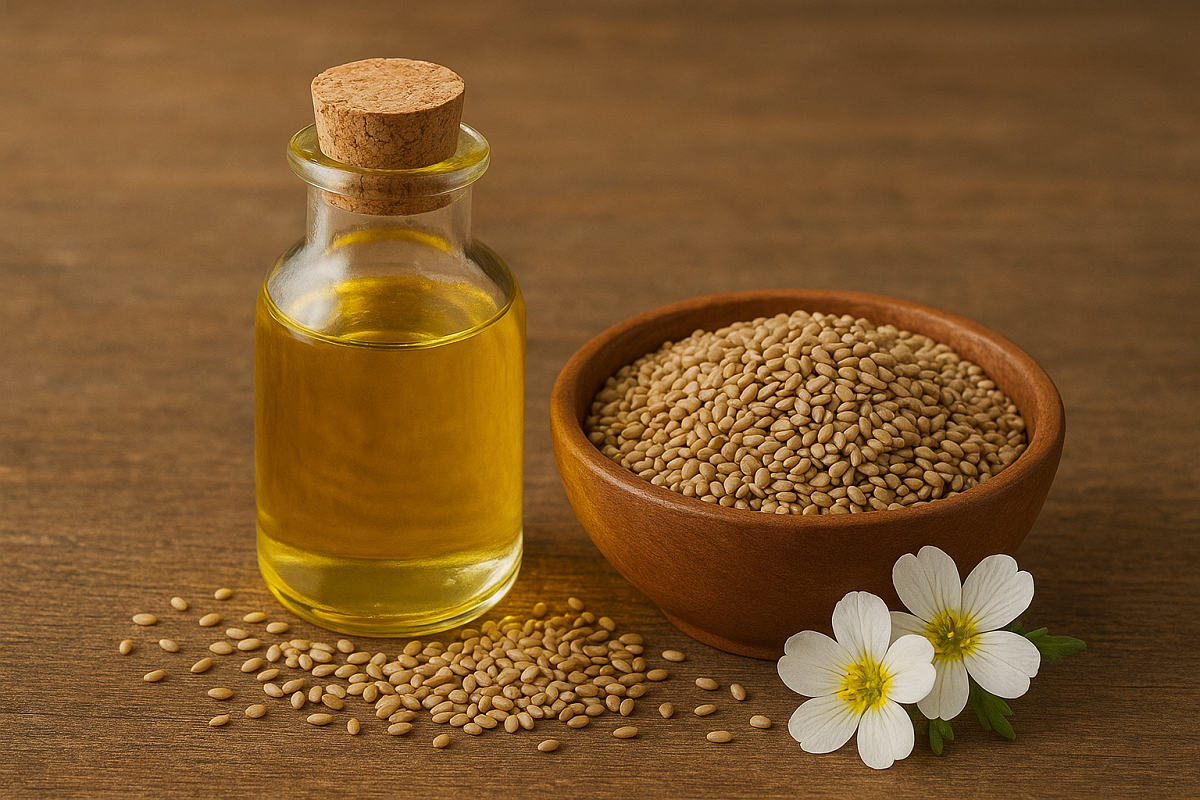
Meadowfoam seed oil derived from the seeds of the Limnanthes alba plant is a lightweight stable and nutrient-rich oil that has gained popularity in the cosmetic and skincare industries. Unlike many other plant oils meadowfoam seed oil is prized not only for its moisturizing properties but also for its exceptional oxidative stability which makes it resistant to rancidity and ideal for long-term use in formulations. It is a golden-yellow oil with a mild slightly nutty aroma and its unique fatty acid composition makes it especially beneficial for skin and hair care.
Native to the Pacific Northwest of the United States meadowfoam has been cultivated since the 1970s primarily as a renewable agricultural crop. Originally it was explored as an industrial oil substitute for sperm whale oil but soon its remarkable cosmetic benefits were discovered. Today meadowfoam seed oil is one of the most valued specialty oils in natural beauty products often referred to as a luxury oil due to its rare chemical composition and high performance.
History and Origin of Meadowfoam Seed Oil
The meadowfoam plant is a small flowering herb native to Oregon California and Western Canada. Its name comes from the sea of white foam-like blossoms that appear when the plant blooms across meadows. Initially the plant was studied as an agricultural crop for soil conservation and as a renewable oil source.
In the mid-20th century scientists discovered that meadowfoam seeds contained an unusually stable oil. Unlike most plant oils which oxidize quickly meadowfoam seed oil demonstrated excellent resistance to rancidity making it valuable for both industrial and cosmetic applications. By the 1980s it had gained traction in the cosmetic industry as a premium oil used in moisturizers hair conditioners and anti-aging formulations.
Today meadowfoam seed oil is almost exclusively grown in the Pacific Northwest where research and cultivation have advanced to ensure high yield and sustainability. Its environmentally friendly production and versatile applications make it a standout among plant-based oils.
Extraction Process of Meadowfoam Seed Oil
Meadowfoam seed oil is typically obtained using cold-press extraction which ensures that the oil retains its delicate nutrients and bioactive compounds. In this method, the seeds are mechanically pressed at low temperatures without the use of chemical solvents.
After pressing the oil is filtered and sometimes lightly refined to improve clarity and purity. Unlike some oils that require extensive processing meadowfoam seed oil maintains its natural integrity making it an excellent choice for both natural and organic formulations.
Its stability thanks to its unique fatty acid profile also makes it an ideal carrier oil as it helps extend the shelf life of other more delicate oils when blended.
Nutritional and Chemical Composition of Meadowfoam Seed Oil
The most distinctive feature of meadowfoam seed oil is its unique fatty acid composition. While most vegetable oils are rich in shorter-chain fatty acids meadowfoam seed oil is dominated by very long-chain fatty acids which provide oxidative stability and exceptional skin benefits.
Key Components
Eicosenoic acid 20:1 – 60–65%
Docosenoic acid 22:1 – 10–20%
Docosadienoic acid 22:2 – 8–12%
Oleic acid 18:1 – 10–15%
Linoleic acid 18:2, omega-6 – 2–5%
Vitamin E Tocopherols – Natural antioxidants that protect skin and prolong shelf life
Phytosterols – Plant sterols with anti-inflammatory and moisturizing effects
This rare fatty acid profile sets meadowfoam seed oil apart from oils like jojoba or argan. It is highly resistant to oxidation, meaning it doesn’t go rancid easily, and it forms a stable barrier on the skin without clogging pores.
Health and Beauty Benefits of Meadowfoam Seed Oil
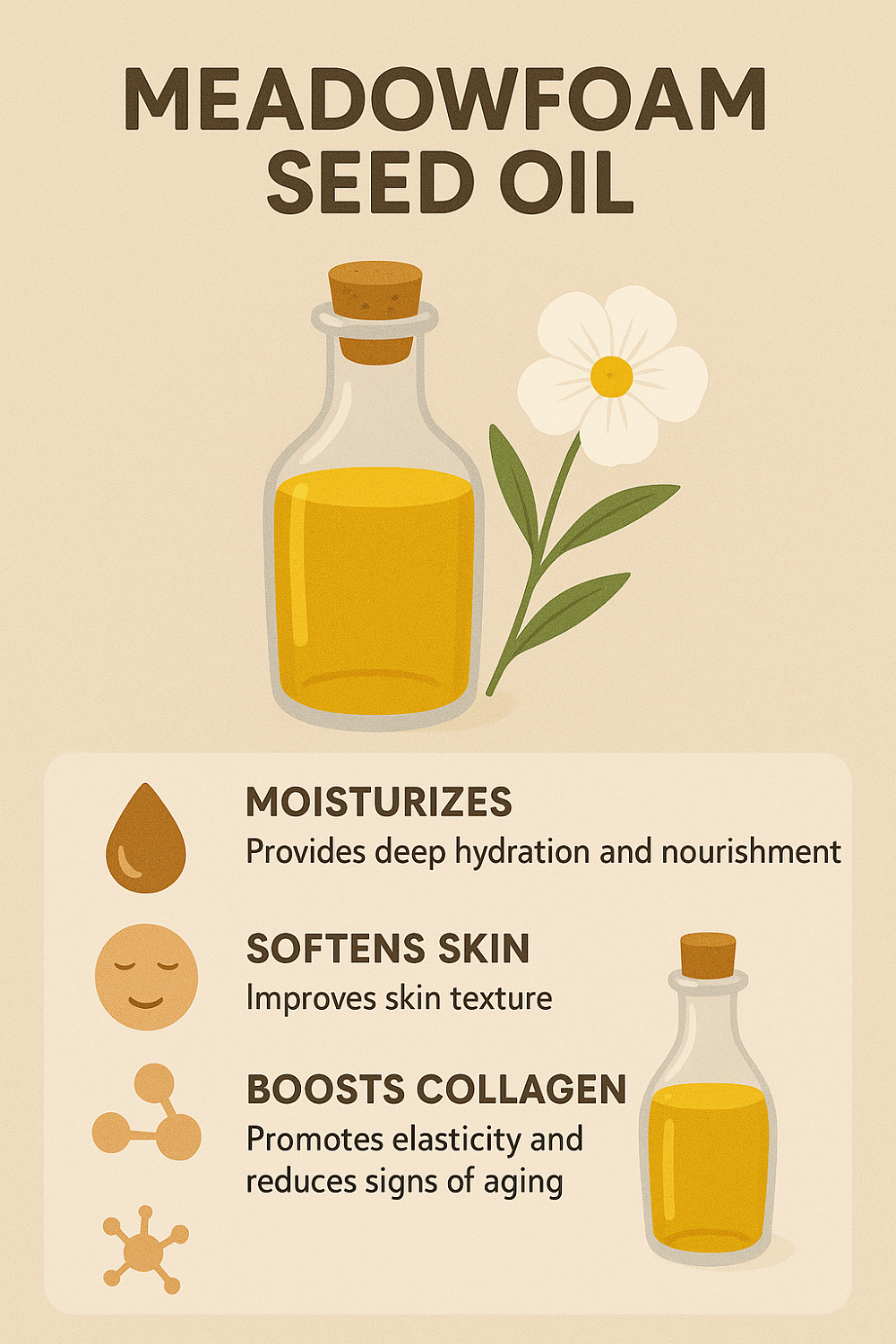
Exceptional Moisturizer for Skin
Meadowfoam seed oil creates a breathable barrier that locks in moisture without leaving a greasy residue. It helps prevent transepidermal water loss making it ideal for dry mature or sensitive skin.
Anti-Aging Properties
Thanks to its high levels of antioxidants and vitamin E meadowfoam seed oil protects the skin from free radical damage caused by UV radiation and pollution. Regular use can help reduce the appearance of fine lines wrinkles and age spots.
Balances Oily and Acne-Prone Skin
Despite being an oil meadowfoam seed oil is non-comedogenic meaning it won’t clog pores. Its light texture helps regulate sebum production making it suitable for oily or acne-prone skin.
Improves Hair Health
Applied to hair meadowfoam seed oil coats each strand with a protective layer reducing breakage frizz and moisture loss. It also improves shine and softness making it a common ingredient in natural shampoos conditioners and hair masks.
Enhances Wound Healing and Soothes Irritation
With its anti-inflammatory properties meadowfoam seed oil can calm redness irritation and inflammation. It’s particularly beneficial for skin conditions like eczema psoriasis and dermatitis.
Protects Against Oxidative Stress
The high concentration of long-chain fatty acids and tocopherols provides natural UV protection though it is not a substitute for sunscreen. This protective effect helps prevent premature aging caused by sun damage.
Extends Shelf Life of Other Oils
Because of its remarkable stability meadowfoam seed oil is often used as a natural preservative in blends. When added to less stable oils such as flaxseed or hemp seed oil it prolongs their usability and effectiveness.
Culinary Uses of Meadowfoam Seed Oil
Unlike common oils such as olive or sunflower meadowfoam seed oil is not widely used in cooking. However research has explored its potential as a food-grade oil due to its stability and mild flavor.
Salad Dressings Its nutty earthy flavor makes it suitable as a gourmet salad oil.
Baking Can be used in specialty baked goods for unique flavor.
Nutritional Supplement Experimental use as a dietary oil though not common in everyday kitchens.
Currently its primary application remains in cosmetics but future innovations may expand its role in the culinary field.
Cosmetic and Skincare Applications
Meadowfoam seed oil is often considered a luxury cosmetic oil due to its silky feel and compatibility with skin. It is a common ingredient in
Moisturizers and Face Creams Provides hydration without heaviness.
Facial Serums Boosts skin elasticity and reduces wrinkles.
Lip Balms Prevents chapping and dryness.
Massage Oils Light texture and high absorbency.
Hair Conditioners Locks in moisture and adds shine.
Sunscreens and Anti-Aging Products Provides antioxidant protection.
Its versatility makes it one of the most sought-after oils in the natural skincare market.
Industrial and Miscellaneous Uses
Beyond cosmetics meadowfoam seed oil also serves industrial purposes
Lubricants Its stability makes it suitable for eco-friendly lubricants.
Biofuels Researched as a renewable energy source.
Industrial Coatings Potential use in paints and varnishes though less common than historical uses of oils like linseed.
Pharmaceuticals Its anti-inflammatory and moisturizing properties have potential applications in topical medical formulations.
Side Effects and Precautions
Meadowfoam seed oil is generally regarded as safe non-toxic and hypoallergenic but there are some considerations
Skin Sensitivity Though rare some individuals may experience mild irritation. Always do a patch test before use.
Ingestion: While not toxic meadowfoam seed oil is not commonly consumed in large amounts. It should only be used as food if labeled food-grade.
Pregnancy and Breastfeeding Considered safe for topical use but ingestion should be avoided unless advised by a doctor.
Overall meadowfoam seed oil is considered one of the safest oils for skin and hair applications.
Frequently Asked Questions
Is meadowfoam seed oil better than jojoba oil?
Both oils share similarities but meadowfoam seed oil is even more stable and has higher levels of long-chain fatty acids. It is better for long-term storage and formulations while jojoba oil closely mimics natural skin sebum.
Can meadowfoam seed oil be used on acne-prone skin?
Yes Its non-comedogenic nature makes it suitable for oily and acne-prone skin types. It helps balance sebum without clogging pores.
Does meadowfoam seed oil have a fragrance?
It has a very mild earthy scent making it ideal for blending with essential oils in aromatherapy and skincare products.
How long does meadowfoam seed oil last?
Unlike many plant oils that oxidize quickly meadowfoam seed oil has a long shelf life of up to 2–3 years when stored properly in a cool, dark place.
Is meadowfoam seed oil edible?
Technically yes, if labeled food-grade but it is not widely available or used as a cooking oil. Its main applications are cosmetic and industrial.