

In the ever evolving world of skincare there are some natural ingredients that manage to stand the test of time not just because they work but because their benefits are rooted in centuries of traditional wisdom. Rosehip seed oil is one such treasure. Extracted from the small but mighty seeds of the rosehip fruit this oil is celebrated for its ability to transform the skin replenish moisture and even tackle stubborn concerns like scars and uneven skin tone.
Unlike many beauty trends that rise and fall with the seasons rosehip seed oil continues to win over dermatologists herbalists and skincare enthusiasts worldwide. Part of its charm lies in its versatility it can be used as a lightweight moisturizer a serum a scar treatment or even as a hair and scalp conditioner. And because it’s so nutrientmdense a few drops can deliver an impressive range of benefits without feeling heavy or greasy.
What is Rosehip Seed Oil?
Rosehip seed oil is a plant-based oil extracted from the seeds of the rosehip the small berry like fruit that remains after a rose has finished blooming. While rose petals are famous for producing the fragrant rose essential oil the seeds are a completely different story they yield an oil that is earthy mildly nutty, and incredibly rich in skin-loving compounds.
The most common species used for rosehip oil are Rosa canina dog rose and Rosa rubiginosa sweet briar both of which thrive in temperate climates and are often cultivated in regions like Chile Argentina and parts of Europe. Once harvested, the seeds are carefully pressed ideally using a cold-press method to extract the oil while preserving its delicate nutrients.
One of the unique characteristics of rosehip seed oil is its classification as a dry oil. This means that unlike heavier oils that can linger on the skin and leave a greasy film rosehip oil absorbs rapidly. Within seconds of applying it the skin drinks it up leaving behind a soft hydrated finish without any shine a quality that makes it a favorite for both daytime and nighttime use.
History and Traditional Uses
The benefits of rosehip seed oil aren’t a recent discovery they have been recognized for hundreds if not thousands of years.
Indigenous people of the Andean region, particularly in Chile have long used rosehip oil to heal wounds, soothe inflammation, and reduce the appearance of scars. Their understanding of the plants regenerative qualities came from observing its effects firsthan much like other traditional medicines passed down through generations.
In ancient Egypt Greece and Rome rose plants were valued not only for their beauty but for their medicinal properties. While rose petals were often used in perfumes and ointments rosehip fruit and seeds were prized for their vitamin content and healing abilities. Infusions of rosehips were common for boosting immunity, long before vitamin C supplements became mainstream.
It was not until the latter half of the 20th century however that modern science began to catch up with traditional wisdom. Research confirmed that rosehip seed oil was rich in essential fatty acids antioxidants and vitamins that could actively improve skin health. This combination of historical use and scientific validation is what makes rosehip oil stand out as a skincare powerhouse today.
Nutrient Profile of Rosehip Seed Oil
What makes rosehip seed oil so effective is its naturally balanced blend of nutrients each playing a distinct role in maintaining and restoring skin health. Let’s break down its key components:
Essential Fatty Acids EFAs
Linoleic Acid Omega-6 Helps maintain the skin’s barrier preventing water loss and keeping skin plump and hydrated. It’s especially beneficial for people with acne prone skin as low linoleic acid levels are linked to breakouts.
Alpha-Linolenic Acid Omega-3 Calms inflammation making it a gentle yet effective option for soothing conditions like eczema or rosacea.
Oleic Acid Omega-9 Penetrates deeply into the skin to deliver lasting moisture.
Vitamins
Vitamin A Natural Retinoids Promote cell turnover and collagen production which helps smooth fine lines and improve skin texture over time.
Vitamin C Acts as a brightening agent, reducing dullness and evening out skin tone. It also helps combat the effects of sun damage and pollution.
Vitamin E Protects against oxidative stress which accelerates the skin’s aging process.
Antioxidants Compounds like lycopene and beta-carotene neutralize free radicals helping to protect skin cells from damage.
Phytosterols Support the repair of the skin barrier essential for maintaining hydration and resilience.
This nutrient cocktail is precisely why rosehip seed oil delivers visible results often in just a few weeks of consistent use.
Extraction Methods and Quality Considerations
Not all rosehip oils are created equal and the method of extraction can greatly affect their potency.
Cold-Pressed Extraction This is the gold standard for preserving vitamins and antioxidants. No heat is applied meaning delicate compounds like vitamin C remain intact.
Solvent Extraction Less expensive but not ideal for skincare use as it may leave behind traces of chemicals and degrade nutrients.
CO₂ Extraction Uses carbon dioxide under pressure to extract the oil purely and efficiently retaining maximum nutrients. However it’s often pricier.
When shopping for rosehip oil, always look for the following
Cold-pressed on the label.
Organic certification to avoid pesticide residue.
Packaging in dark amber glass bottles to prevent light-induced oxidation.
Minimal or no additional ingredients ensuring purity.
Skin Benefits of Rosehip Seed Oil
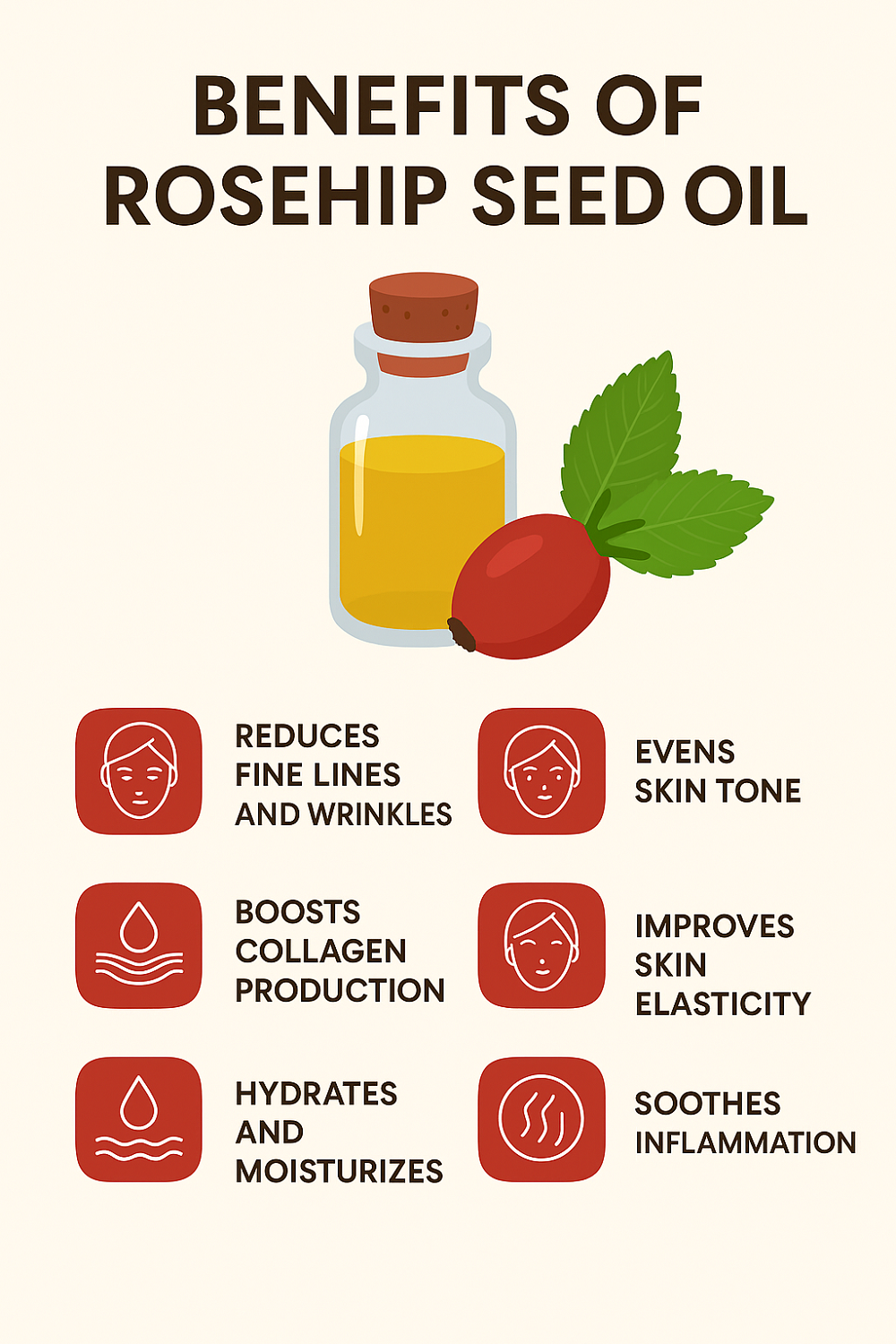
Rosehip seed oil has earned its spot in the skincare hall of fame thanks to a variety of benefits
Anti-Aging Power
Natural vitamin A stimulates collagen and elastin production which are vital for maintaining skin firmness and elasticity. Over time fine lines become less noticeable and skin feels more supple. Unlike synthetic retinol rosehip oil delivers these benefits with a lower risk of irritation making it suitable for sensitive skin types.
Brightens Skin and Evens Tone
The combination of vitamin C and beta-carotene helps fade dark spots and post acne marks. With regular application skin looks more luminous with a uniform tone that reflects healthy cell renewal.
Deep Hydration Without Clogging Pores
Rosehip oil is non-comedogenic rating of 1 meaning it’s unlikely to block pores. Its EFAs reinforce the skin’s lipid barrier, locking in moisture and preventing dehydration ideal for both dry and combination skin.
Scar and Stretch Mark Reduction
Clinical studies have shown that rosehip oil can significantly improve the appearance of scars and stretch marks thanks to its regenerative fatty acids and vitamin A content.
Calms Irritation and Redness
Anti-inflammatory compounds help soothe redness itching and irritation providing relief for chronic skin conditions without harsh chemicals.
Hair and Scalp Benefits
Rosehip seed oil also has a place in hair care
Dry Scalp Treatment Massaging a few drops into the scalp can relieve itching and flakiness.
Strengthens Hair Strands Omega fatty acids fortify the hair shaft reducing breakage.
Adds Natural Shine Smooths the hair cuticle resulting in a healthy, glossy finish.
Supports Growth Improves scalp circulation potentially aiding hair thickness and growth over time.
Precautions
While generally safe, always do a patch test. Avoid applying to active wounds and store away from heat and light to prevent rancidity.
Sustainability
Choose brands that support ethical sourcing, fair trade and sustainable harvesting to protect wild rose populations.